
Cart items:
Perpetual Harvest Setup Guide for Continuous Cannabis Production
Apr 18, 2026
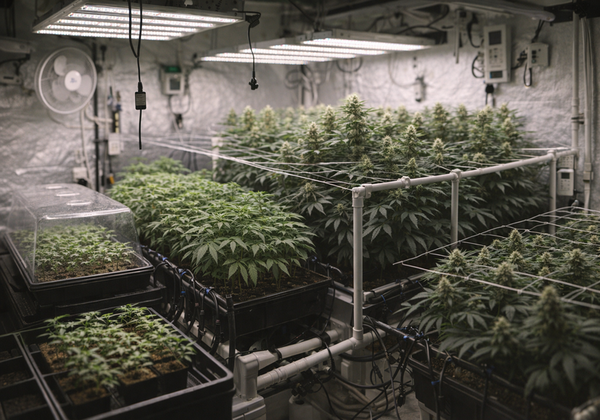
Maintaining a perpetual harvest system is an effective way to ensure a continuous supply of cannabis while optimizing limited grow space. By carefully managing crop rotation, environmental controls, and cultivation equipment, intermediate growers can boost both efficiency and yield. This guide walks you through practical steps to set up a perpetual harvest system tailored for home growers and small commercial operations looking to maximize their grow potential.
Understanding Perpetual Harvest and Crop Rotation
Perpetual harvest involves staggering planting and harvest schedules so that you have crops at different production phases simultaneously—cloning, vegetative growth, flowering, and harvest. This method keeps the grow room continuously productive, avoiding downtime between harvests and seed-to-flower cycles.
Key tips for crop rotation:
- Divide your grow space or tents into sections dedicated to each growth stage.
- Schedule planting in intervals, for example every 1–2 weeks, to maintain stage overlap.
- Use labels and detailed records to track plant progress and schedules accurately.
- Prevent nutrient buildup or disease by periodically rotating strains or growing media types.
In such a system, efficient use of cultivation equipment and environmental control is critical to maintain consistent growth conditions for plants at differing stages in the same facility.
Optimizing Grow Environments with Equipment
A well-controlled environment is the backbone of any successful perpetual harvest setup. Here are essential components and practical recommendations:
- Environmental Controllers: Use integrated environmental controllers to monitor and regulate temperature, humidity, CO2, and lighting cycles automatically. This ensures that each crop stage receives ideal conditions tailored to its needs. You can explore environment controllers at Cannavista for reliable options.
- LED Grow Lights: Different growth stages require different light spectra and intensities:
- Cloning/Seedling Stage: Gentle lights with cool spectrum (~9000K) and moderate intensity (~30–50 µmol/s) like the Gavita LED Clone Bar provide optimal conditions without stressing young plants.
- Vegetative Stage: Balanced full spectrum LED grow lights with higher blue light content and moderate-intensity, such as TotalGrow™ Stratum lights, help promote robust foliage growth.
- Flowering Stage: High-intensity lights emphasizing red wavelengths support bud development effectively. High-powered full or flowering spectrum LED panels are ideal for this phase.
Review LED grow lights at Cannavista to find stage-specific lighting solutions.
- Automated Irrigation Systems: Incorporate automated irrigation with timers and moisture sensors to deliver precise watering schedules for each crop stage. Automation reduces labor, minimizes errors, and ensures plants receive necessary hydration without delay. Look at irrigation pumps and systems to build your automation setup.
- Ventilation and Airflow: Proper air circulation with fans and ducting helps maintain temperature/humidity and strengthens plants. Explore fans and blowers for effective airflow management.
Supporting Plant Structure and Management
Managing plants through different growth phases simultaneously requires support and organization:
- Trellising and Plant Support: Use durable trellises like Botanicare Horti-Trellis to support branches and improve light penetration. This helps prevent branch breakage and promotes even canopy development. Multiple sizes are available from Cannavista’s plant support collection.
- Grow Containers: Choose appropriate pots or fabric grow bags to support optimal root health and ease transplanting between stages. Browse pots and containers suitable for various stages and space constraints.
- Labeling and Record-Keeping: Maintain clear labels for each plant and use journals or digital tracking to manage schedules, nutrient regimens, and plant health. Check available books and journals for record-keeping tools.
Best Practices for Continuous Grow Room Management
Success with perpetual harvest systems hinges on disciplined management and monitoring. Consider these ongoing tips:
- Divide your grow space into zones allocated to specific phases, controlling variables and optimizing conditions for each zone separately.
- Regularly calibrate environmental sensors and maintain equipment to avoid unforeseen issues.
- Implement integrated pest management and routinely monitor for pests and diseases to prevent spread across stages. Find pest control options at Cannavista’s pest control category.
- Maintain strict sanitation protocols with cleaners and disinfectants between crop rotations. Visit cleaning supplies for effective products.
- Adjust light schedules precisely to match plant stage needs, using timers and controllers.
- Plan your crop rotation schedules in advance to minimize downtime and efficiently use all available grow space.
Summary and Next Steps
Setting up a perpetual harvest system is an excellent way to maximize grow space efficiency and maintain continuous cannabis production. By carefully combining crop rotation planning with the right cultivation equipment—LED lights tailored to each stage, reliable environmental controllers, automated irrigation systems, and sturdy plant support—you can improve both yield consistency and plant quality.
Optimize your grow room management with zoning, detailed record-keeping, and regular equipment maintenance to sustain smooth operations.
Ready to upgrade your grow environment and build your perpetual harvest system? Browse Cannavista’s wide selection of cultivation equipment and supplies to find all the tools you need for success.
Comments
No posts found
Write a review
Meet Cam - Your Cannavista Assistant
Hey there! I’m Cam, your Cannavista guide. Need help finding gear, tracking an order, or starting your own store? Just ask!