
Cart items:
Far Red Light and Emerson Effect: Boost Cannabis Yields
Jul 16, 2026
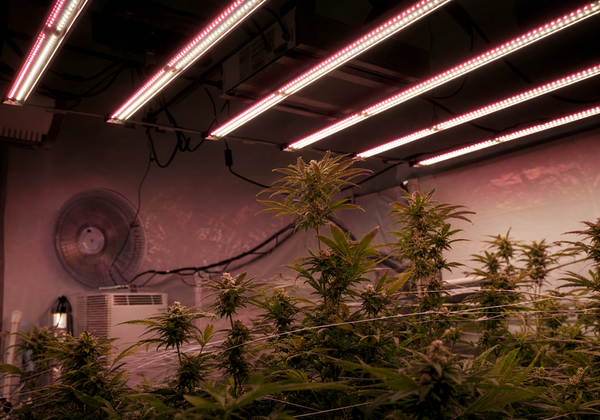
Unlock the science behind far red light and the Emerson Effect to enhance photosynthesis and optimize cannabis flowering in indoor grow rooms. This deep dive offers advanced growers technical insights and practical tips for harnessing premium far red LED grow lights to maximize yields.
Understanding the Far Red Spectral Zone
Far red light occupies the light spectrum range approximately between 700 to 750 nanometers, sitting just beyond visible red light. It plays a critical role in plant photobiology by influencing photoreceptors called phytochromes, which regulate key growth processes. Unlike traditional red or blue wavelengths optimizing photosynthesis directly, far red light modulates plant morphology and developmental signaling.
Indoor cultivation environments depend heavily on artificial lighting systems such as LED grow lights. Incorporating far red LEDs supplements the spectrum and unlocks physiological responses that promote efficient photosynthetic activity and trigger flowering pathways. However, the crucial component lies in precise spectral balance to avoid overstretching or delayed maturation.
The Emerson Effect: Synergistic Photosynthesis Enhancement
Discovered by Robert Emerson in the 1950s, the Emerson Effect reveals a synergistic increase in photosynthetic efficiency when plants simultaneously receive both red light (generally 660-680 nm) and far red light (~720 nm). When either wavelength is applied alone, photosynthesis is limited; combined, they amplify electron transport and energy conversion within chloroplasts.
For cannabis growers, leveraging this effect means supplementing standard red/blue light arrays with far red LEDs during flowering phases can significantly increase photosynthetic photon efficiency (PPE). This enhanced energy capture drives more robust bud set and higher biomass accumulation, directly correlating to improved yields.
Far Red Light's Role in Cannabis Flowering and Morphology
Phytochrome-mediated signaling pathways respond dynamically to ratios of red to far red light, impacting flowering induction and plant architecture. A higher far red component simulates sunset-like conditions, signaling the plant to switch from vegetative growth to reproductive flowering. This is especially noteworthy in photoperiod-sensitive cannabis strains.
Advanced growers use far red supplementation strategically, often during the end-of-day photoperiod, to emulate daylight changes and optimize flowering timing. Additionally, far red light induces internodal elongation and canopy expansion, facilitating better light penetration and bud site exposure. However, excessive far red intensity without proper balance can lead to undesirable plant stretching and weaker structural integrity.
Implementing Far Red LED Grow Lights in Indoor Grow Rooms
Incorporating far red LEDs requires selecting high-quality, full-spectrum lighting equipment compatible with existing grow infrastructure. Systems allowing independent control of far red channels enable fine-tuning spectral output throughout growth cycles.
Environment control systems should integrate lighting schedules that synchronize far red supplementation primarily at dusk, capitalizing on natural photoreceptor responses. Monitoring tools such as PAR meters and spectrometers can verify spectral distribution and intensity accuracy. Combining far red light with CO2 enrichment and optimized nutrient delivery systems maximizes photosynthetic gains.
Consider exploring Cannavista's LED Grow Lights category to find top-tier far red LED lighting tailored for commercial-scale indoor cannabis production.
Operational Best Practices for Far Red Light Usage
- Spectral Ratio Management: Maintain a balanced red to far red ratio to optimize Emerson Effect benefits while controlling internodal length.
- Photoperiod Timing: Integrate far red light primarily during end-of-day periods to simulate natural dusk conditions and trigger timely flowering.
- Environmental Synergy: Employ complementary grow room controls such as temperature, humidity, and CO2 levels to harmonize with lighting protocols.
- Data-Driven Adjustments: Utilize real-time monitoring with PAR sensors and spectral analysis tools to adjust far red intensity precisely, minimizing energy costs while maximizing yield.
- Compliance and Cost Optimization: Select energy-efficient LED technology and programmable lighting systems to meet regulatory requirements and reduce operational expenses.
For reliable accessory options supporting environment and light control, visit Cannavista's Environment Controls category.
Conclusion: Harnessing the Emerson Effect for Bigger Yields
Far red light integration via precision LED systems empowers advanced cannabis cultivators to scientifically enhance photosynthesis through the Emerson Effect and fine-tune flowering dynamics. Thoughtful implementation within a controlled indoor environment supports maximizing biomass production and flower quality while maintaining plant health and operational efficiency.
Explore Cannavista’s curated selection of far red LED grow lights and environmental control solutions to elevate your cultivation to professional levels. Embrace spectral science to unlock your grow room’s full potential today.
Comments
No posts found
Write a review
Meet Cam - Your Cannavista Assistant
Hey there! I’m Cam, your Cannavista guide. Need help finding gear, tracking an order, or starting your own store? Just ask!