
Cart items:
Building a Custom Grow Room Dashboard for Centralized Monitoring
Aug 6, 2026
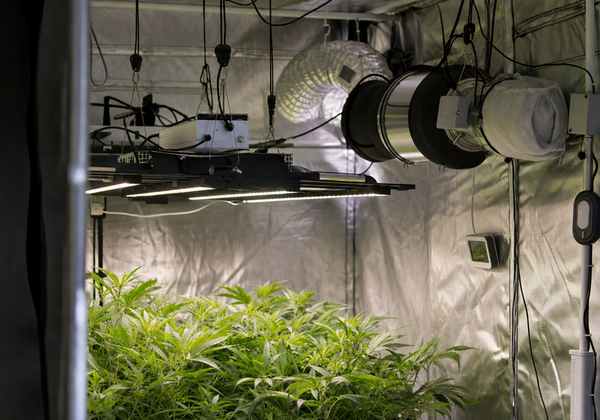
Maximize your small commercial cannabis grow operation's efficiency and ROI with a custom grow room dashboard. This technical how-to guide walks you through building an integrated monitoring and automation interface tailored for indoor tents and grow rooms.
Why Build a Grow Room Dashboard?
Centralized monitoring of key environmental factors such as temperature, humidity, CO2, and lighting is crucial for consistent yields and streamlined operations. A custom dashboard enables real-time data access and control, helping you optimize the grow environment while reducing manual labor. This scalability also supports expansion efforts without sacrificing quality or increasing overhead excessively.
Key Components for Your Grow Room Dashboard
- Environmental Sensors: Essential sensors include temperature, humidity, PAR (photosynthetically active radiation) meters, CO2 sensors, and pH/EC probes for fertigation systems. Leak or flood detectors can prevent water damage in wet zones, while soil moisture sensors provide remote irrigation data.
- Automation Controllers: Integrated control panels manage lighting schedules, HVAC components (fans, humidifiers, dehumidifiers), CO2 dosing, and irrigation alarms based on sensor feedback. These ensure rapid environmental adjustments to maintain ideal conditions.
Consider the Digital Integrated Sensor Module from Link4 Corporation for consolidated environmental data input, and the Link4 iPonic 624 Dual Zone Grow Room Controller for advanced environmental control with automation capabilities.
Building and Integrating Your Dashboard System
Start with setting up sensors in key positions around your indoor tent or grow room to capture microclimate variations. Connect sensor outputs to an environmental controller that supports modular expansion and open APIs for future upgrades or additional sensors.
Develop or adopt a software interface that logs data continuously, presents real-time graphs, and supports remote alerts for critical parameter deviations. Manual overrides should be built-in for safety and quick adjustment during emergencies.
For nutrient delivery automation, integrate pH and EC sensors with dosing systems and irrigation schedules to precisely control fertigation. Incorporate timers for lighting and variable speed fans for airflow management, enhancing overall environmental stability.
Practical Tips for Scaling and Cost Optimization
- Choose sensors and controllers compatible with your size of operation but with scalability options to avoid costly replacements.
- Invest in robust, industrial-grade components designed for continuous use and precise readings.
- Implement data-driven adjustments to maximize yield while minimizing energy and resource expenditure.
- Regularly maintain and calibrate sensors to ensure accuracy and longevity.
Conclusion
Creating a custom grow room dashboard integrating environmental sensors and automation control systems is an investment in precision and efficiency. It empowers small commercial growers to optimize microclimates and irrigation while enabling scalability and better operational ROI. Explore environment controls at Cannavista to find the right equipment for building your smart monitoring setup.
Take the next step — browse Cannavista’s comprehensive selection of environmental sensors and control panels to build your custom grow room dashboard today!
Comments
No posts found
Write a review
Meet Cam - Your Cannavista Assistant
Hey there! I’m Cam, your Cannavista guide. Need help finding gear, tracking an order, or starting your own store? Just ask!