
Cart items:

Roots Organics Terp Tea Microbe Charge Microbial Soil Amendment - 2-1-2 NPK - 3 lb
$32.01
$36.71
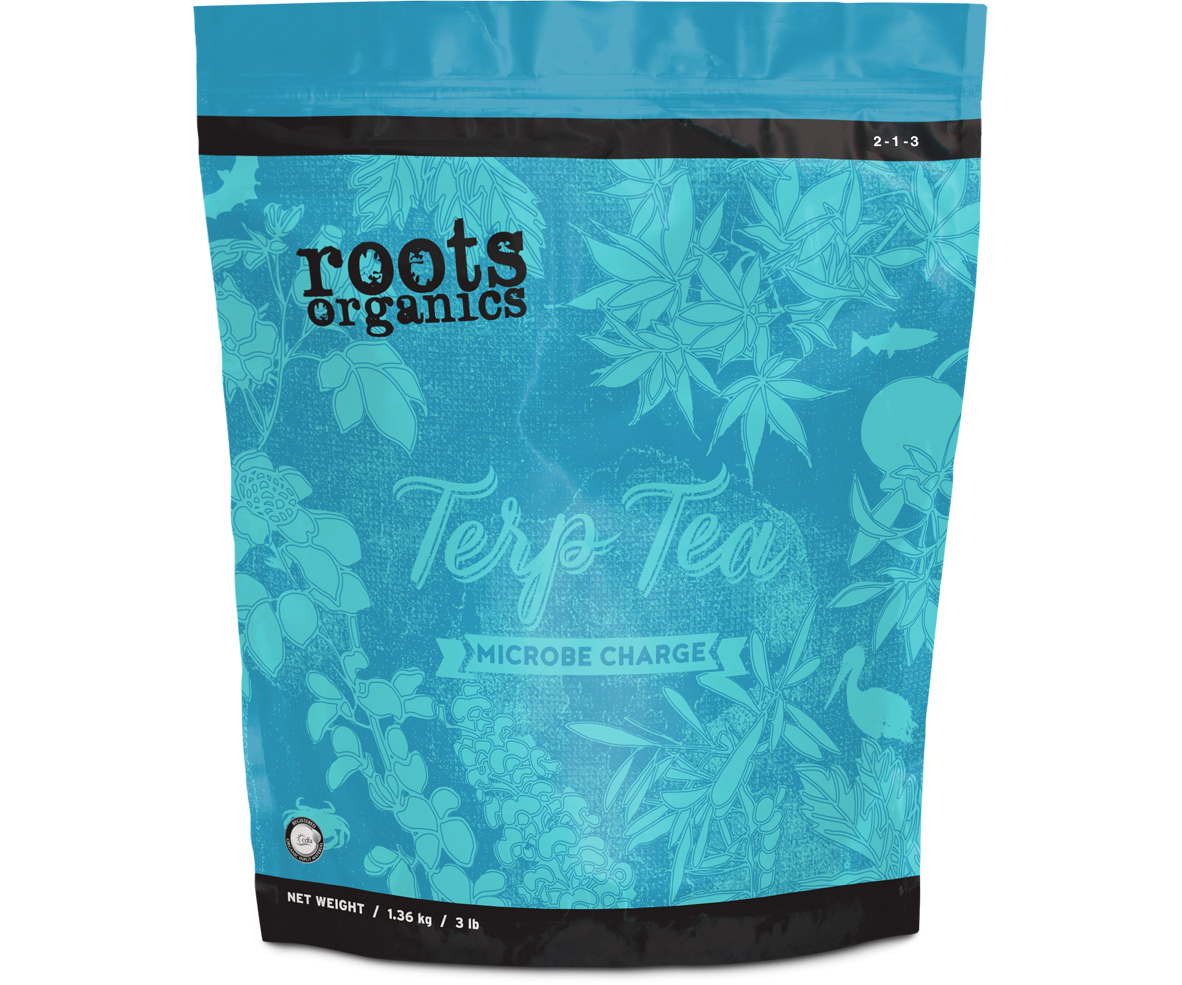
Roots Organics Terp Tea Microbe Charge Microbial Soil Amendment - 2-1-2 NPK - 3 lb
ROTTMC3V2

With a strong portfolio of manufactured and distributed brands, we are one of the lead...
City: US, Shoemakersville
Our Advantages
- Competitive Price Matching
- Fast & Discreet Shipping (2-3 days)
- Safe & Secure Shopping
- High Quality Trusted Brands
Buying Multiple Units?
ACH Payments Available
Beneficial Bacteria & Mycorrhizal Root Charge, NPK 2-1-2, 3lb
Terp Tea Microbe Charge leads with its microbial payload rather than its nutrient numbers, pairing beneficial bacteria with mycorrhizal fungi to build root-zone biology on heavy-feeding plants. The same NPK 2-1-2 blend of earthworm castings, kelp extract, bat guano, alfalfa meal, soybean meal, fish protein hydrolysate, dolomite, gypsum, and crab meal applies here, framed around the bacteria and fungi doing the work.
This 3lb bag suits growers who specifically want the bacteria-and-mycorrhizae framing of Microbe Charge for a small number of containers.
Key Features & Benefits
- Beneficial bacteria & mycorrhizal fungi — the defining feature, supporting vigorous root development
- Nine-ingredient natural blend — the same earthworm-castings-and-kelp-extract base as the rest of the line
- Direct application or tea brewing — flexible enough to work into soil or brew into a compost tea
- Organic production compatible — allowed for use in organic crop production
Who Should Use This Terp Tea Microbe Charge
Growers specifically looking for the bacteria-and-mycorrhizae angle on Microbe Charge, for a base amendment or a regular fertilizer component, are the fit for this version.
About Roots Organics
This version of Microbe Charge is framed around the same beneficial-bacteria and mycorrhizal-fungi payload that Aurora Innovations built into the Terp Tea root-biology line.
Frequently Asked Questions
- What is the NPK of this Microbe Charge?
- 2-1-2, the same modest nutrient charge used across the Microbe Charge line. The microbial inputs are the main draw, not the N-P-K figure.
- What is it derived from?
- The blend draws on earthworm castings, kelp extract, bat guano, alfalfa meal, soybean meal, fish protein hydrolysate, dolomite, gypsum, and crab meal. Nine natural ingredients carry the modest NPK charge alongside the bacteria and fungi.
- What does the bacteria and fungi do?
- They support vigorous root systems on heavy-feeding, high-yield plants. That biological support is layered on top of the modest nutrient charge.
- How is it applied?
- As a direct application, brewed into a tea, or worked in as a base amendment. It's allowed for use in organic crop production either way.
Brand
Roots Organics
GTIN
638104030038
Product weight
3.1 lb
Length
10 in
Width
3 in
Height
12 in
Returns
30-day returns
No reviews found
Please sign in so that we can notify you about a reply