
Cart items:

Roots Organics Terp Tea Bloom Booster Organic Bloom Booster Fertilizer - 0.5-6-18 NPK - 9 lb
$80.06
$91.79
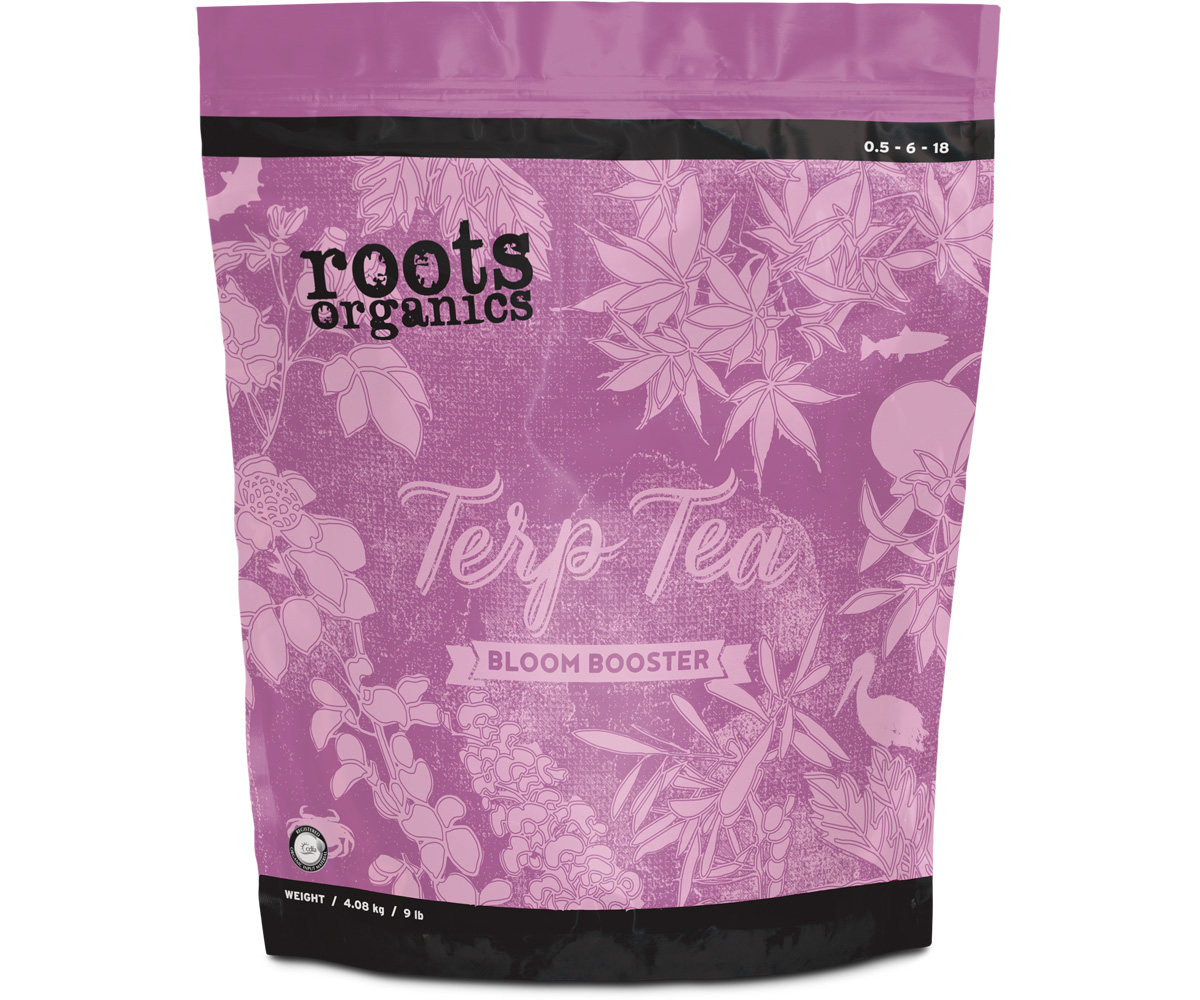
Roots Organics Terp Tea Bloom Booster Organic Bloom Booster Fertilizer - 0.5-6-18 NPK - 9 lb
ROTTBB9V2

With a strong portfolio of manufactured and distributed brands, we are one of the lead...
City: US, Shoemakersville
Our Advantages
- Competitive Price Matching
- Fast & Discreet Shipping (2-3 days)
- Safe & Secure Shopping
- High Quality Trusted Brands
Buying Multiple Units?
ACH Payments Available
Beneficial-Bacteria Potash Supplement for Late Bloom, NPK 0.5-6-18, 9lb
Sulfate of potash on its own only addresses the mineral side of a late-flowering potassium shortfall, so Terp Tea Bloom Booster pairs that potash input with a beneficial-bacteria addition meant to keep nutrients available at the root zone under stress. Alongside the same NPK 0.5-6-18 base of sulfate of potash, phosphate rock, crab meal, fishbone meal, alfalfa meal, langbeinite, and kelp meal, the bacteria component is what distinguishes this version.
This 9lb bag fits mid-sized gardens that want the beneficial-bacteria version of Bloom Booster across several flowering rooms.
Key Features & Benefits
- NPK 0.5-6-18 formula — the same late-flowering potash ratio, built from seven natural inputs
- Beneficial bacteria component — helps keep nutrients available at the root zone under late-bloom stress
- Stress-resistance support — aimed at plants working hard through the final stretch of flowering
- Soluble potash supplementation — boosts overall plant growth and yield alongside the bacterial input
Who Should Use This Terp Tea Bloom Booster
Growers who want the late-flowering potash boost paired specifically with a beneficial-bacteria component for root-zone stress resistance are the fit for this version of Bloom Booster.
About Roots Organics
This version of Bloom Booster carries the same core Terp Tea formula that Aurora Innovations built for late flowering, with the beneficial-bacteria component called out as the defining feature.
Frequently Asked Questions
- What is the NPK of this Bloom Booster?
- 0.5-6-18, the same late-flowering potash ratio used across the Bloom Booster line. It's an additive, not a standalone base feed.
- What is it derived from?
- Sulfate of potash, phosphate rock, crab meal, fishbone meal, alfalfa meal, langbeinite, and kelp meal, plus a beneficial-bacteria component. The seven mineral and meal inputs supply the NPK, while the bacteria addition is layered on separately.
- How does the bacteria component help?
- It supports nutrient availability at the root zone and helps plants resist stress during the demanding final weeks of flowering. That's layered on top of the potash and phosphorus inputs.
- When should it be used?
- During the later stages of flowering, alongside whatever bloom nutrient program is already running. It's not intended as an early-flower or vegetative-stage input.
Brand
Roots Organics
GTIN
638104030182
Product weight
9.1 lb
Length
12 in
Width
14 in
Height
5 in
Returns
30-day returns
No reviews found
Please sign in so that we can notify you about a reply