
Cart items:
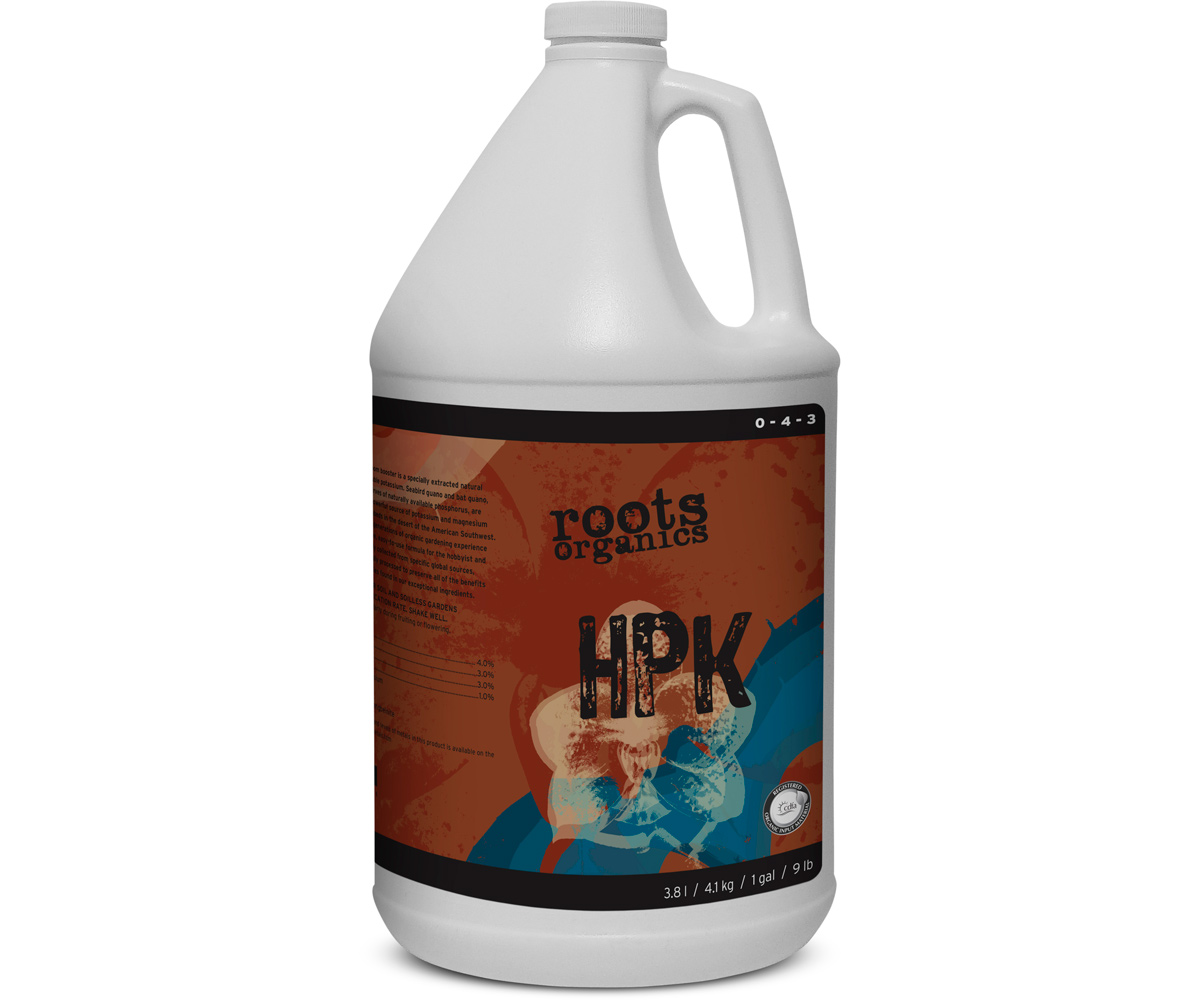
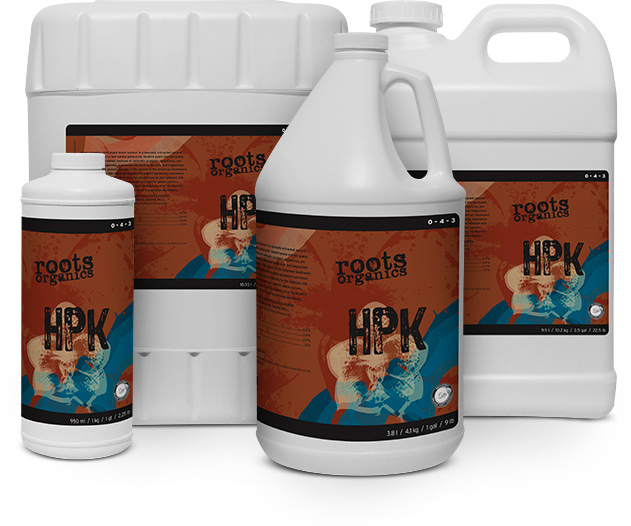


Roots Organics HPK Liquid Bat Guano Booster - 0-4-3 NPK - 1 Gal
ROHPKG

With a strong portfolio of manufactured and distributed brands, we are one of the lead...
City: US, Shoemakersville
Our Advantages
- Competitive Price Matching
- Fast & Discreet Shipping (2-3 days)
- Safe & Secure Shopping
- High Quality Trusted Brands
Buying Multiple Units?
ACH Payments Available
Phosphate Rock & Langbeinite Bloom Booster, 0-4-3, 1gal
Phosphorus and potassium both climb in importance once a plant shifts into bloom, and Roots Organics HPK pairs two mineral sources built for that shift: phosphate rock for available natural phosphorus, and langbeinite, a potassium source mined from ancient sea beds, for potassium. The result is a 0-4-3 liquid bloom booster that keeps both ingredients minimally processed to preserve their natural qualities.
This 1gal size suits regular indoor growers running HPK as a standard part of their bloom-stage program.
Key Features & Benefits
- Phosphate rock — an available natural phosphorus source central to the formula
- Langbeinite potassium source — mined from ancient sea beds in the American Southwest deserts
- 0-4-3 NPK ratio — targets phosphorus and potassium supplementation without adding nitrogen
- Minimal processing — preserves the natural qualities of both mineral ingredients
Who Should Use Roots Organics HPK
Home and professional gardeners who want a liquid bloom booster combining two natural mineral sources, rather than a synthetic P-K blend, are the fit for HPK.
About Roots Organics
HPK sits alongside HP2 in the mineral-derived side of the Roots Organics lineup, a catalog Aurora Innovations has built from Eugene, Oregon since 2000 around natural, minimally processed ingredient sourcing.
Frequently Asked Questions
- What is the NPK of HPK?
- HPK carries an NPK of 0-4-3, supplying phosphorus and potassium without nitrogen. That ratio is built for the bloom stage, when P and K demand rises relative to nitrogen.
- What is HPK made from?
- It combines phosphate rock, a natural source of available phosphorus, with langbeinite, a mined potassium source. Both are kept minimally processed to retain their natural nutrient qualities.
- What is langbeinite?
- Langbeinite is a naturally occurring potassium mineral mined from ancient sea beds in the American Southwest. It's used across the fertilizer industry as an unrefined source of potassium, sulfur, and magnesium.
- How is it different from HP2?
- HP2 is a phosphorus-only 0-4-0 formula, while HPK adds langbeinite for a 0-4-3 phosphorus-and-potassium blend. Growers who want potassium alongside their phosphorus boost use HPK; those who want phosphorus alone use HP2.
Brand
Roots Organics
GTIN
609728632533
Product weight
10 lb
Length
6.5 in
Width
6.5 in
Height
11.7 in
Returns
30-day returns
No reviews found
Please sign in so that we can notify you about a reply