
Cart items:

Lilly Miller Rose & Flower Food - 5-8-4 - 4 Lb Bag
$98.16 / $8.18 per unit
(minimum purchase of 12)
(minimum purchase of 12)
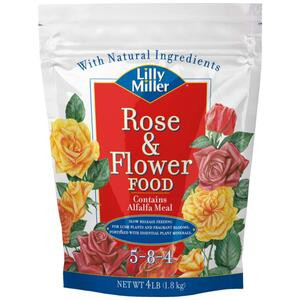
Lilly Miller Rose & Flower Food - 5-8-4 - 4 Lb Bag
83180079

Rootline Supply Co. provides reliable tools and products for growers, gardeners, and...
City: US, Tewksbury
Our Advantages
- Competitive Price Matching
- Fast & Discreet Shipping (2-3 days)
- Safe & Secure Shopping
- High Quality Trusted Brands
Buying Multiple Units?
ACH Payments Available
Slow-Release Feeding for Flowering Plants - 4 Lb Bag
Flowering plants use nutrients steadily, and a single heavy dose is easy to waste or mismanage. This granular plant food combines natural ingredients with a conventional nutrient base and releases slowly, so feeding continues for up to 8 weeks. Its analysis is 5-8-4.
The 4 Lb bag fits hobbyists, small beds, containers and anyone trying a new feeding routine before buying in volume. Larger operations can order multiple bags.
Key Features & Benefits
- 5-8-4 analysis — a higher middle number supports root and bloom development.
- Slow-release feeding — fewer applications across the feeding period.
- Up to 8 weeks of feeding — a predictable schedule for planning.
- Granular form — easy to measure and apply to soil.
- Includes alfalfa meal — an organic ingredient alongside the nutrient base.
Who Should Use Lilly Miller Rose & Flower Food
Gardeners who grow flowering ornamentals in beds or containers and want a simple, long-lasting granular feed will find it practical. It suits small-scale growers who prefer a bagged dry product over liquid concentrates.
About Lilly Miller Rose & Flower Food
Lilly Miller Rose & Flower Food is a dry, granular plant food with a 5-8-4 NPK analysis, sold as a 4 Lb bag. Its listed ingredients include dried poultry waste, sulfate of potash, magnesia, ammonium phosphate, ammonium sulfate, alfalfa meal and fritted trace elements.
Frequently Asked Questions
Q: How long does one application last?
A: The blend feeds for up to 8 weeks. Actual timing depends on watering, temperature and plant demand.
Q: What does 5-8-4 mean?
A: It is the NPK analysis: the percentages of nitrogen, phosphate and potash by weight. This blend carries more phosphate than nitrogen or potash.
Q: Is it a liquid or a dry feed?
A: It is dry and granular. You spread it on the soil rather than mixing it into a reservoir, so it is not designed for hydroponic systems.
Q: How does slow-release compare with liquid feeding?
A: Slow-release granules supply nutrients gradually and need fewer applications. Liquid feeds act faster but usually need more frequent dosing.
Q: How should I apply it?
A: Follow the label directions for rate and method. Water after applying so the granules start to break down.
Brand
Lilly Miller
GTIN
070624007068
MPN
100528816
NPK
5-8-4
Nutrient Material
Granulated
Product weight
4.3 lb
Returns
30-day returns
No reviews found
Please sign in so that we can notify you about a reply