
Cart items:

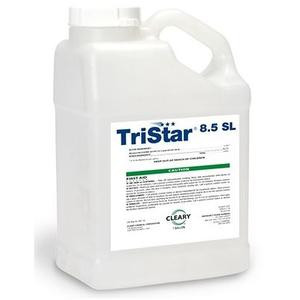
TriStar 8.5% SL Insecticide - 1 Gal
70-85241

Rootline Supply Co. provides reliable tools and products for growers, gardeners, and...
City: US, Tewksbury
Our Advantages
- Competitive Price Matching
- Fast & Discreet Shipping (2-3 days)
- Safe & Secure Shopping
- High Quality Trusted Brands
Buying Multiple Units?
ACH Payments Available
Translaminar Systemic Foliar Spray - 1 Gal
Managing insect pests on ornamentals and transplants means choosing a product that fits your site and your rotation plan. This insecticide uses acetamiprid, a translaminar systemic active ingredient, and is applied as a foliar spray. Its mode of action group is 4A, which helps you plan rotations.
The 1 gal container suits small to mid-size greenhouse and nursery operations that mix by the teaspoon or ounce. Larger operations may prefer to compare it with bulk sizes.
Key Features & Benefits
- Translaminar systemic action — the active ingredient moves into leaf tissue after application.
- Mode of action group 4A — supports rotation planning.
- Flexible mixing range — foliar rates run 1/4 to 1 1/2 tsp per gal or 4 to 25 oz per 100 gal, varying by pest.
- 12 hour restricted entry interval — lets you schedule re-entry.
Who Should Use TriStar 8.5% SL
Licensed applicators and growers working with ornamentals and certain vegetable transplants in greenhouses, shadehouses, lath houses and outdoor nurseries. Read the full label before use.
About TriStar 8.5% SL
TriStar 8.5% SL is a translaminar systemic insecticide with acetamiprid as the active ingredient. The distributor lists it under EPA registration number 8033-106-1001 and manufacturer part number 10520041. It is sold as one 1 gal unit.
Frequently Asked Questions
Q: How is it applied?
A: It is applied as a foliar spray. Rates vary by pest, from 1/4 to 1 1/2 tsp per gal or 4 to 25 oz per 100 gal. Check the label for your situation.
Q: What does translaminar mean?
A: Translaminar describes an active ingredient that penetrates the leaf surface and moves within the leaf tissue. This lets it reach areas the spray did not directly cover.
Q: What is mode of action 4A?
A: It is the classification code for the acetamiprid group. Growers use these codes to rotate between different modes of action.
Q: Are there state restrictions?
A: Yes. It is a restricted use pesticide in MD and NY and is not registered in ND or WY. Confirm local rules before ordering.
Q: How long before people can re-enter treated areas?
A: The restricted entry interval is 12 hours. Follow the label for protective equipment and any added requirements.
Q: Are there plants I should avoid?
A: The label says not to use it on verbena. Review the full label for other crop and site limits.
Brand
Nufarm
MPN
10520041
Product weight
9.5 lb
Returns
30-day returns
No reviews found
Please sign in so that we can notify you about a reply