
Cart items:

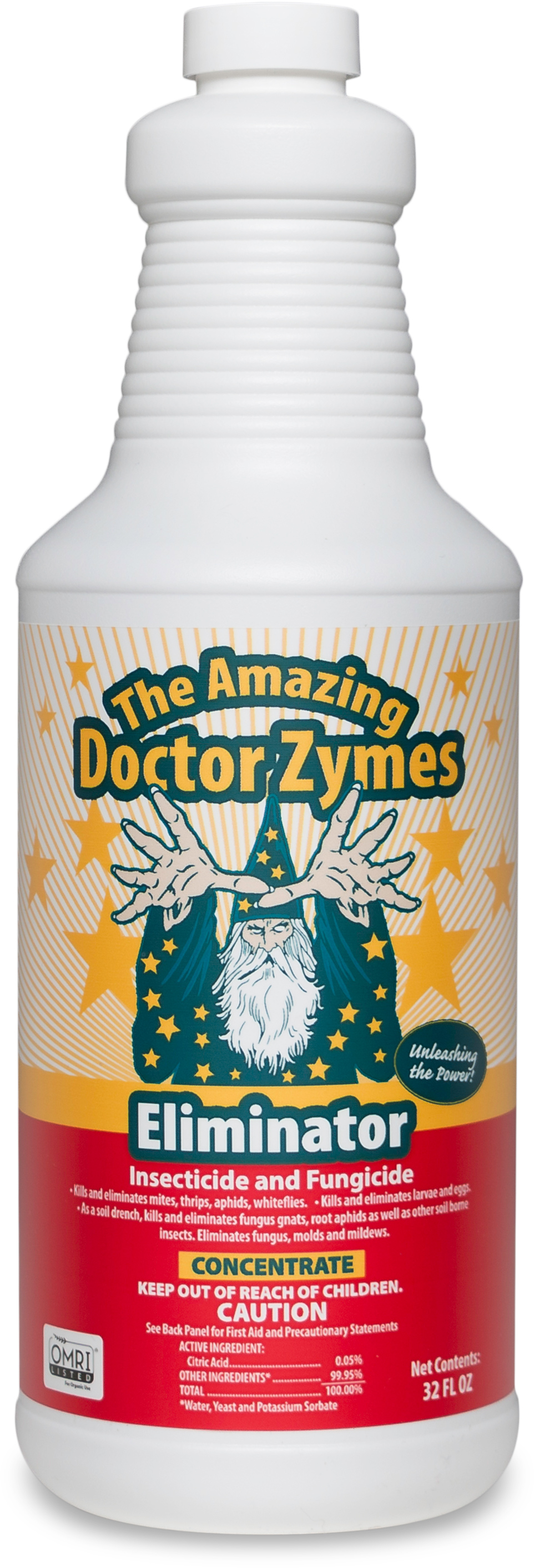
The Amazing Doctor Zymes Eliminator Insecticide Concentrate - 32 Oz
DZE1QT

With a strong portfolio of manufactured and distributed brands, we are one of the lead...
City: US, Shoemakersville
Our Advantages
- Competitive Price Matching
- Fast & Discreet Shipping (2-3 days)
- Safe & Secure Shopping
- High Quality Trusted Brands
Buying Multiple Units?
ACH Payments Available
Doctor Zymes Eliminator OMRI Listed Citric Acid Insecticide and Fungicide, 32 Oz
Doctor Zymes Eliminator is an OMRI Listed liquid concentrate that controls soft-bodied insects, molds, and mildews on indoor and outdoor plants using citric acid derived through fermentation. Unlike synthetic insecticides that target one specific biological pathway a pest can eventually evolve around, Eliminator works by mechanical action, disrupting an insect's ability to breathe and breaking down the proteins and organic matter it leaves behind, while shifting surface pH to conditions hostile to mold and mildew growth. Because that's mechanical action rather than a targeted biological mechanism, resistance isn't something pests or pathogens can develop against it. Eliminator is also oil-free, non-toxic, biodegradable, made from food-grade ingredients, and labeled safe to apply up to and on the day of harvest.
The 32-ounce concentrate is the entry-level size for Eliminator, appropriate for a home grower, a small tent, or anyone mixing a smaller spray batch per application cycle.
Key Features & Benefits
- OMRI Listed — certified for use in organic production.
- Citric acid active ingredient — fermentation-derived, the only citric-acid production method OMRI recognizes for listing.
- Mechanical mode of action — disrupts insect respiration and breaks down fungal biomass rather than targeting a specific biological pathway pests could adapt around.
- Oil-free formula — won't clog stomata, unlike many oil-based insecticidal sprays.
- Safe through harvest day — can be applied up to and on the day of harvest according to label directions.
Who Should Use Eliminator
Eliminator fits growers who want an OMRI Listed, harvest-safe spray for soft-bodied insects and fungal pathogens without introducing synthetic pesticide residue. It works on indoor and outdoor plants and is appropriate for both preventive scheduling and treating an active, early-stage infestation.
Application Conditions: Temperature, Light, and Water Quality
Eliminator has specific application conditions that affect performance and safety: don't apply when ambient temperatures exceed 90°F or while grow lights are on, and use warm water (75-98°F) at a pH of 6-7 for the best emulsification. Don't combine it with other pesticides, fungicides, or nutrients in the same application, and let foliage dry under normal conditions afterward.
Frequently Asked Questions
- What pests and pathogens does Eliminator target?
- It's labeled for soft-bodied insects such as spider mites, aphids, and whiteflies, along with fungal pathogens including powdery mildew and gray mold. Because it works by mechanical action rather than a biological pathway, it's effective against a broad range of soft-bodied pests without relying on a specific toxin.
- Is it really safe to apply on the day of harvest?
- Yes, the label allows application up to and on the day of harvest. That's possible because the citric acid formula is food-grade, non-toxic, and biodegradable rather than a residue-leaving synthetic pesticide.
- Why does the oil-free formulation matter?
- Oil-based insecticidal sprays can coat a leaf's stomata, the pores plants use for gas exchange, which can reduce photosynthesis and stress the plant. Eliminator's oil-free citric acid formula leaves stomata clear after it dries.
- How should Eliminator be applied to avoid damaging plants?
- Dilute the concentrate per label directions using warm water between 75 and 98°F with a pH of 6 to 7, and don't apply when ambient temperatures exceed 90°F or while grow lights are on. Let foliage dry under normal conditions afterward, and don't combine it with other pesticides, fungicides, or nutrients in the same application.
- Can pests build resistance to Eliminator over repeated use?
- No. Because it works by mechanically disrupting an insect's respiration and physically breaking down fungal biomass rather than targeting one biological pathway, there's no adaptation route the way there is with many synthetic, single-target pesticides.
Brand
The Amazing Doctor Zymes
GTIN
728028331776
Product weight
2.3 lb
Length
3.5 in
Width
3.5 in
Height
10 in
Returns
30-day returns
No reviews found
States
- District of Columbia
- Idaho
- Kansas
- Maine
- Mississippi
- North Dakota
- South Dakota
Please sign in so that we can notify you about a reply