
Cart items:

Trinity 10.5% TR Total Release Aerosol Fungicide - Triticonazole - 3 oz Cans - Case
$505.49
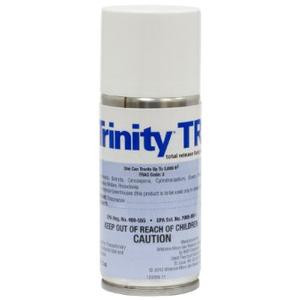
Trinity 10.5% TR Total Release Aerosol Fungicide - Triticonazole - 3 oz Cans - Case
71-3050

Rootline Supply Co. provides reliable tools and products for growers, gardeners, and...
City: US, Tewksbury
Our Advantages
- Competitive Price Matching
- Fast & Discreet Shipping (2-3 days)
- Safe & Secure Shopping
- High Quality Trusted Brands
Buying Multiple Units?
ACH Payments Available
Total Release Aerosol Fungicide for Greenhouse Ornamentals - Case
Spraying every bench by hand takes labor and can miss dense canopy. This total release aerosol fills the greenhouse space from a single can, so one application covers the area. Its active ingredient is triticonazole, a Group 3 mode of action fungicide.
Sold by the case, this unit suits nurseries and commercial greenhouse operations that treat several houses or repeat applications on a schedule.
Key Features & Benefits
- Total release aerosol — treats the greenhouse space without hand spraying.
- Triticonazole active ingredient — a Fungicide Group 3 mode of action.
- Coverage rate — 1 can per 3000 sq ft, or 2 cans per 3000 sq ft for Cercospora and Fusarium.
- Repeat schedule — applications can be repeated at 7-day intervals, up to 3 consecutive applications.
- Restricted entry interval — REI of 12.
Who Should Use Trinity 10.5% TR
Commercial greenhouse and nursery operators growing ornamentals who want a total release option for disease management programs. Always follow the label.
About Trinity 10.5% TR
Trinity 10.5% TR is a total release aerosol with triticonazole, EPA registration 499-555, labeled for greenhouse ornamentals. The label lists Alternaria, Cylindrocladium, Cercospora, Myrothecium, rust and Rhizoctonia. It is not registered in NY.
Frequently Asked Questions
Q: What does total release mean?
A: A total release aerosol empties its contents in one go and fills the enclosed space. You do not spray it by hand.
Q: How many cans do I need?
A: The standard rate is 1 can per 3000 sq ft. For Cercospora and Fusarium, use 2 cans per 3000 sq ft.
Q: How often can I repeat treatment?
A: Treatments can be repeated at 7-day intervals, up to 3 consecutive applications.
Q: Can I use it in New York?
A: No. This product is not registered in NY.
Q: What is the mode of action?
A: It is Fungicide Group 3. Rotating modes of action is a common practice in disease management programs.
Brand
BASF
MPN
59012781
Product weight
5.2 lb
Returns
30-day returns
No reviews found
Please sign in so that we can notify you about a reply